Development test stands for E-motors
Standard test stand design
imc standard test stand implementation
Test stand mechanics
Measurement & control system
Standard test stand basic software
Test modules
Commissioning on site
Application examples
Standard test stands for DC and EC/BLDC motors
imc DCcompact and imc ECcompact
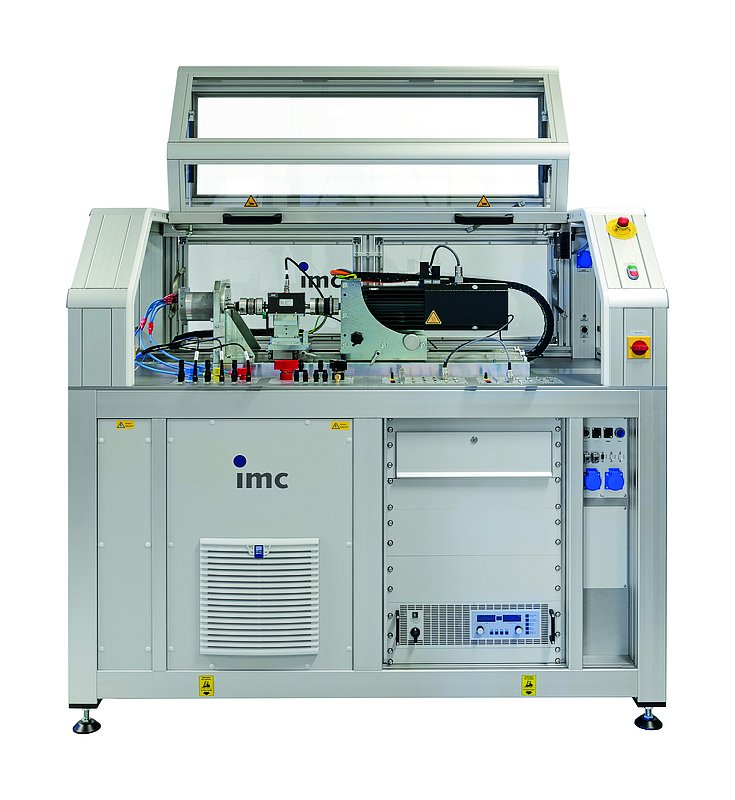
In the development of new electric motors and drive concepts, the fast and efficient determination of the characteristic values is crucial for a smooth project progress. With automated test sequences and a direct calculation of results from the recorded measurement data, imc supports numerous customers in the optimization of their test processes.
The imc standard development test stands for DC and EC/BLDC motors are a cost-effective and quickly available alternative to a customer-specific test bench.
Brochure


imc standard test stand design
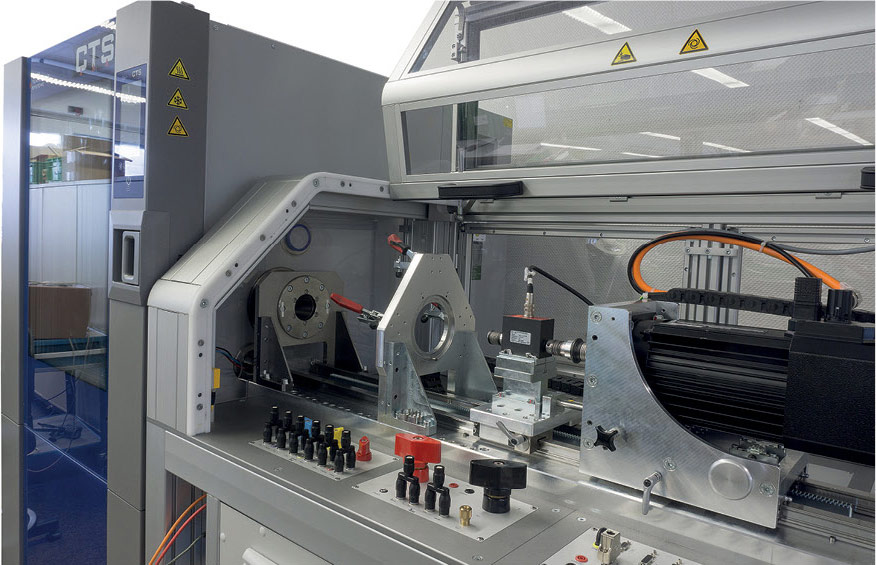
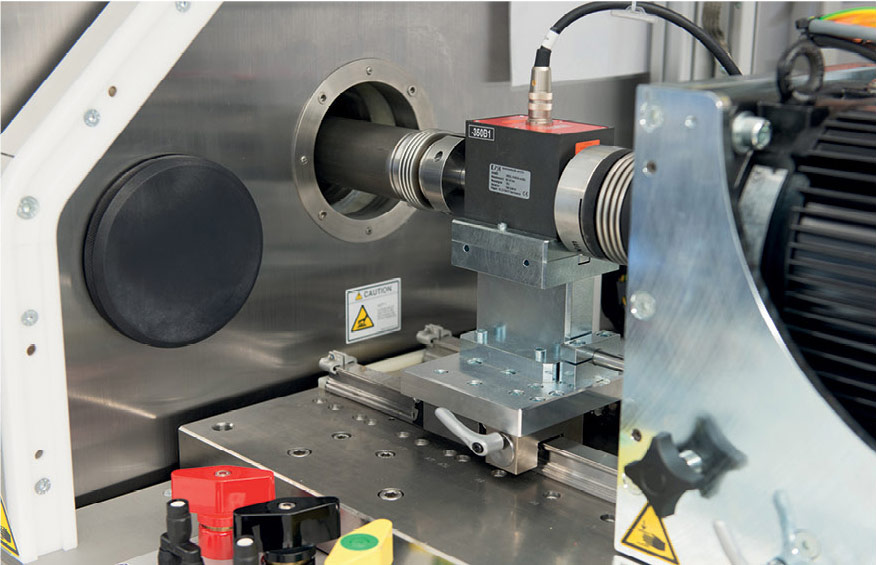
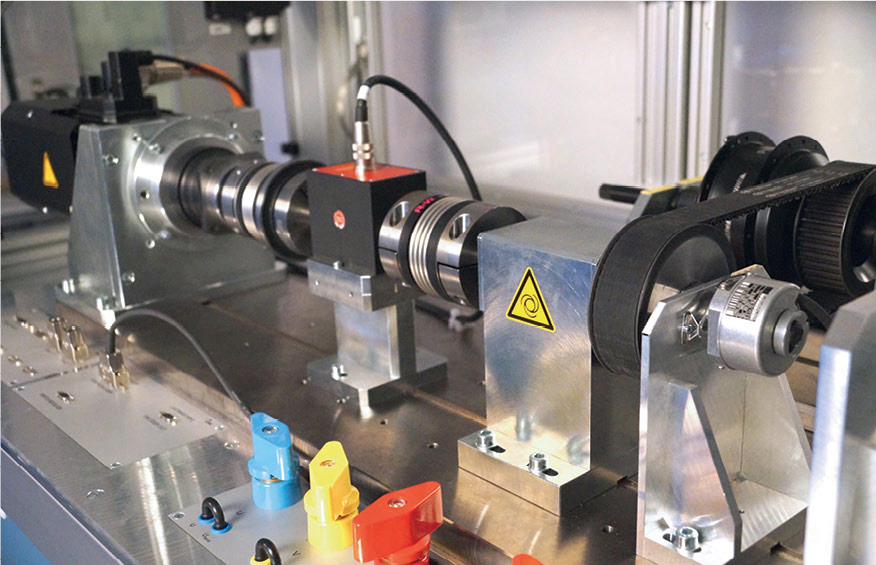
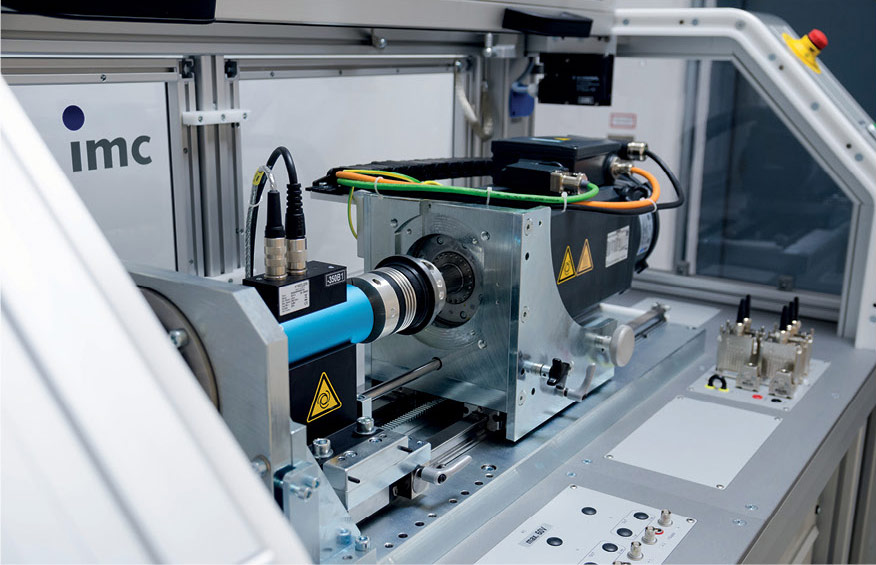
The test objects are mounted and aligned to the test bench powertrain via an adapter flange on the test object mount. The powertrain includes the load machine, the safety coupling and the torque transducer and is moved via a linear guide. It is connected to the test object axis by means of bellows coupling.
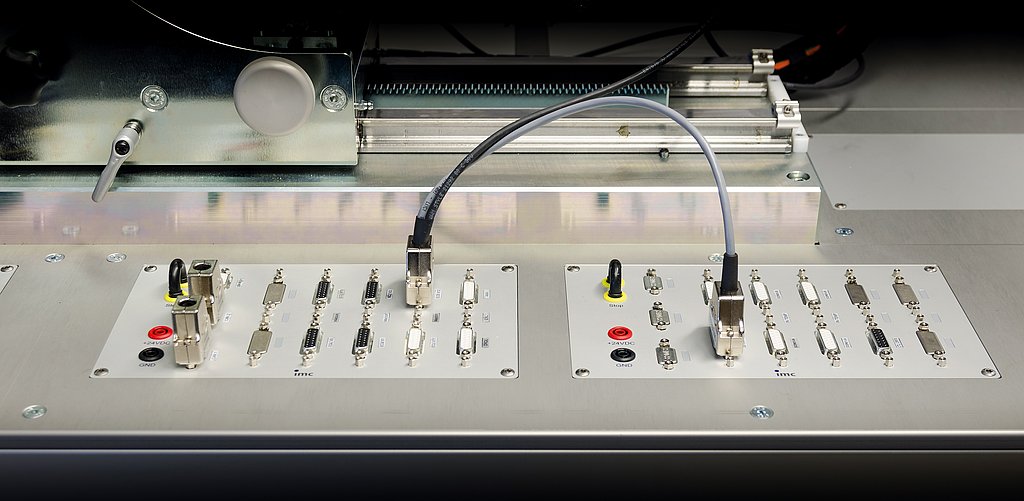
The electrical connection of the test object is made with cables from the connection panels in the test chamber:
- For DC and EC motors with their own inverter at the parameter-adjustable output of the built-in DC power supply
- For EC/BLDC motors without inverter at the 3-phase output of the installed industrial converter
During the testing operation, the test chamber is secured with a lockable protective hood.
Typical test objects for the standard design:
- imc DCcompact: DC or EC/BLDC motors with their own inverter
- imc ECcompact: EC-/BLDC motors without inverter
- Motor power up to 3 kW
- Torque up to 50 Nm
- Speeds up to 10,000 rpm
Types of tests:
- Standard: characteristic curve and manual control
- Optional: other types of tests (such as cogging torque, back EMF, dynamic frictional torques or the determination of the primary motor parameters using the parameter identification method)
Safety-relevant realization
The test benches have a CE mark and are designed and built according to the Machinery Directive. The delivery includes the necessary safety-related components, a risk analysis and an operating manual.
Test stand mechanics
Base frame
- Dimensions: 1650 x 800 x 910 mm (W x D x H)
- 19“ built-in system, energy panel
- Aluminum profile construction with mounting and floor plates as well as polymer coverings
Safety hood (foldable)
- Dimensions: 1650 x 800 x 590 mm (W x D x H)
- Provides protection for the operator and provides the user with max. freedom of movement
- One panel with gas pressure springs
- Both panels made from transparent polycarbonate
Mounting mechanics
- Allows moving of load machine and torque transducer for securing test objects
- Ensures simple and quick mounting of couplings and test objects
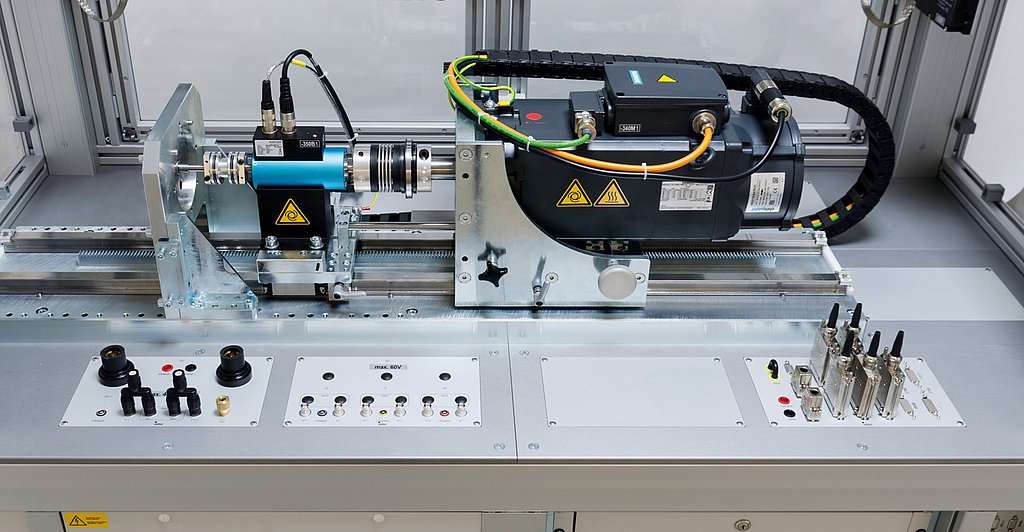
Powertrain
- Dimensions: 1220 x 50 x 250 mm (W x H x D)
- In addition to the base plate, comprised of all mechanical elements necessary to support the sensors and actuators (such as the load machine as well as the brackets for the torque transducer and test object)
Measurement & control system
Measurement & control system for the imc ECcompact
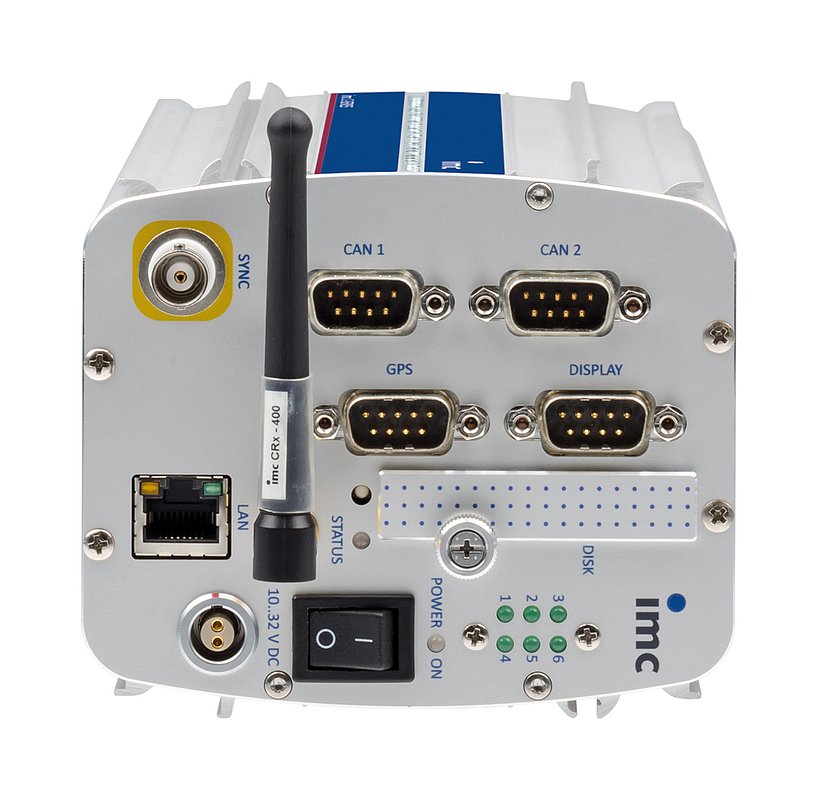
- With the imc ECcompact, the imc CRONOSflex 2000 modular measurement and control system is used
- It provides an aggregate sampling rate of 2000 kHz with a max. per channel rate of 100 kHz
- The measurement system can be expanded with clickable amplifiers or via imc CANSAS modules
Measurement & control system for the imc DCcompact
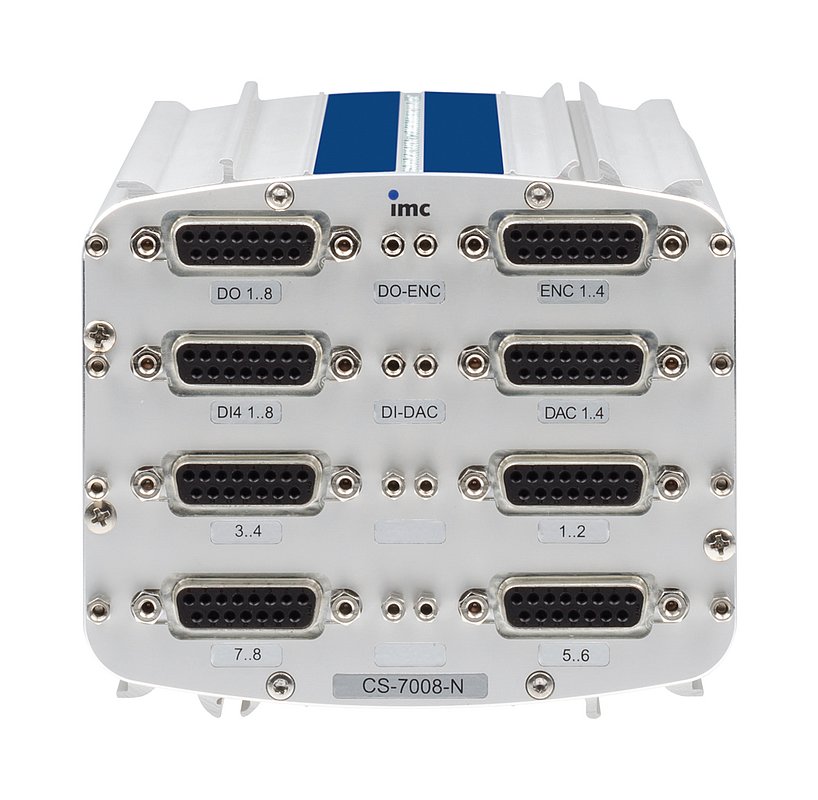
- The test stand is equipped with the imc C-SERIES compact measurement system
- It provides an aggregate sampling rate of 400 kHz
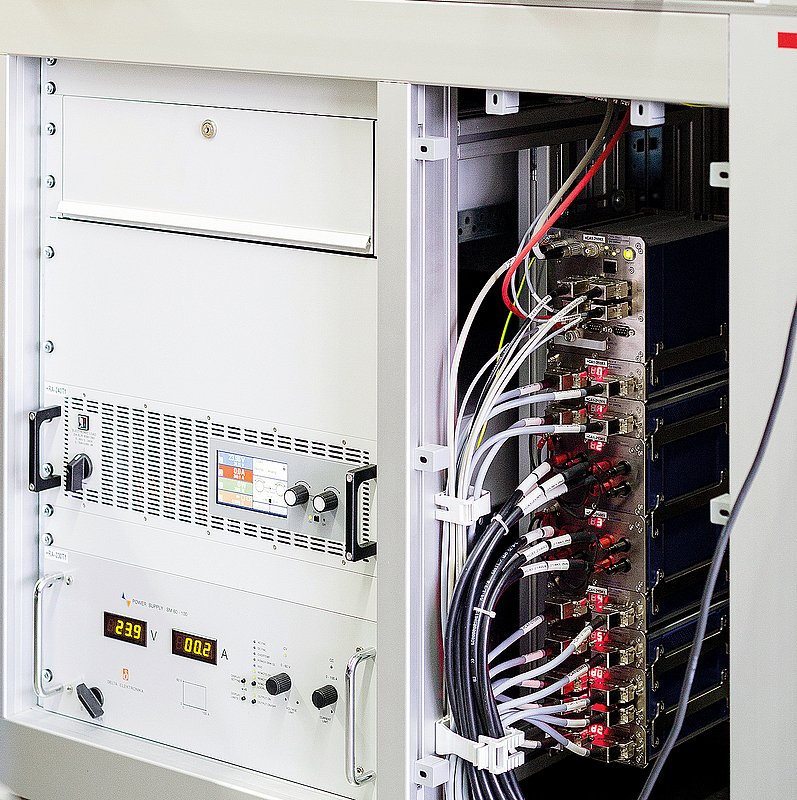
DC power supply
A power-controlled power supply with a maximum power of 3 kW is integrated for the supply with a DC voltage.
Torque sensor for rotating measurements
- The torque sensor is integrated into the test stand powertrain and connected to the test object and load machine by means of couplings
- 1st measurement range: 10 Nm; 2nd measurement range: 100 Nm (only for imc ECcompact); bandwidth: 1 kHz
Current sensors (current transformers)
- The current measurement is carried out via a potential-free current transformer
- Number of sensors: 4 (ECcompact), 1 (DCcompact); measurement range: 200 A; bandwidth: 100 kHz; linearity: +/- 0.1%
Test object activation EC (only with imc ECcompact)
- The test stand activation for EC motors is fed by the DC supply and offers a three-phase control for the test objects
- The activation is guided by a rotation angle signal and can be parameterized via software
- Performance data: max. voltage = 100 V, max. current = 100 A
Standard test stand basic software
The software for controlling the test bench is built in a platform strategy. The basis of this platform is the basic software, which can be individually expanded by the required test sequences.
The software provides the basic functionalities for the administration of the tests and the test parameters. It manages the limit values for the protection of the test objects and controls the measurement data storage as well as test results. It includes the password-controlled user management, which allows access to various areas and is used to control the rights of individual users.
The platform strategy makes it easy to expand the scope of the test stand, e.g., additional test types or additional test parameters. The interfaces for the expansion are disclosed and documented.
Configuration and visualization unit
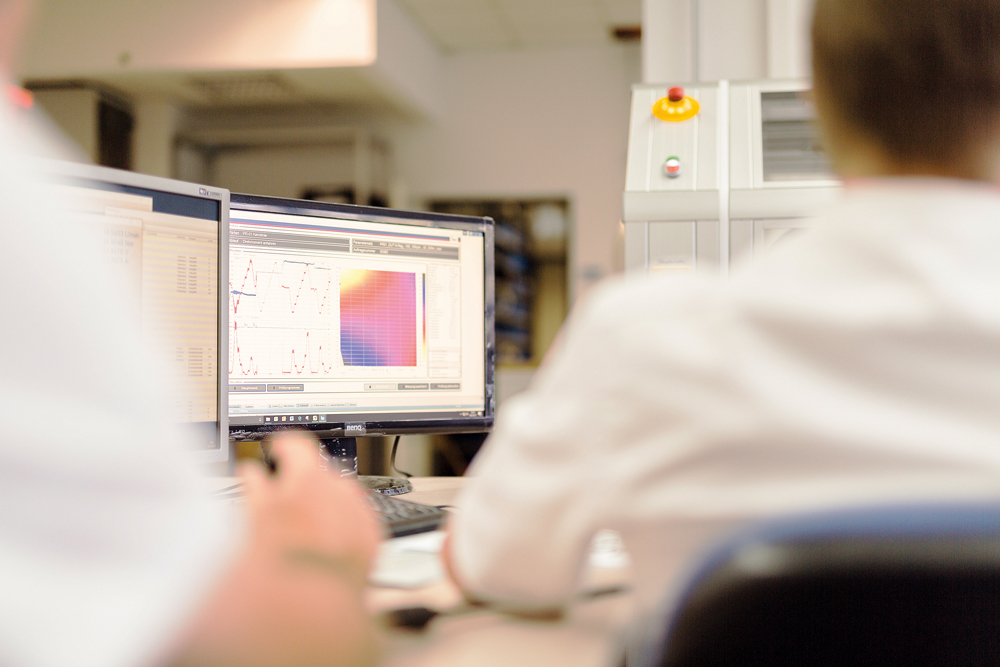
The test stand computer supports the user by means of the test stand basic software:
- Configuration of the test sequences
- Execution of the test sequences
- Visualization of the measurement results
- Evaluation of the tests carried out
Software platform: imc STUDIO
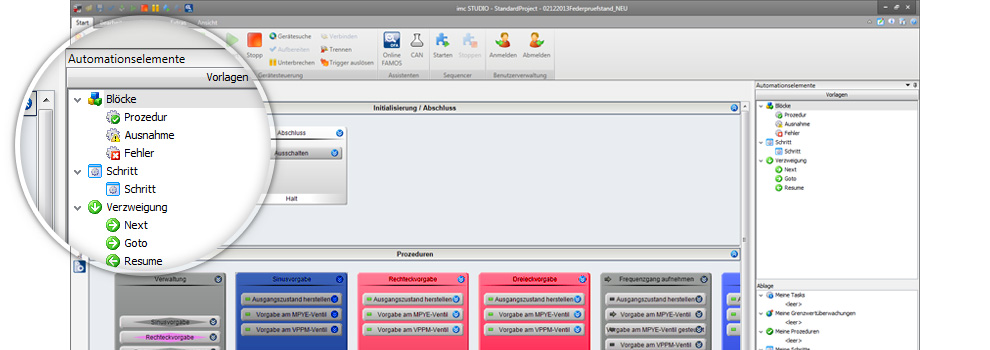
imc STUDIO is the development platform for the creation of application-oriented solutions in the field of measurement and control technology. imc STUDIO is especially productive with tools such as the Automation Editor, the Sequencer or the real-time data analysis tools imc Inline FAMOS and imc Online FAMOS. With their help, automated processes are implemented from simple test applications up to complex test stands.
Signal analysis software: imc FAMOS
The powerful signal analysis software imc FAMOS offers numerous analysis functions and measurement data visualization and report possibilities. In addition, the software also functions as a processing tool for automation tasks in imc STUDIO.
The ability to load and store a wide range of data formats, to create comprehensive automation, to select the most diverse display possibilities, and to search hundreds of measurements in the shortest possible time make imc FAMOS a powerful tool for anyone who wants to perform professional data analysis.
Test modules
Test module: speed-controlled characteristic curves
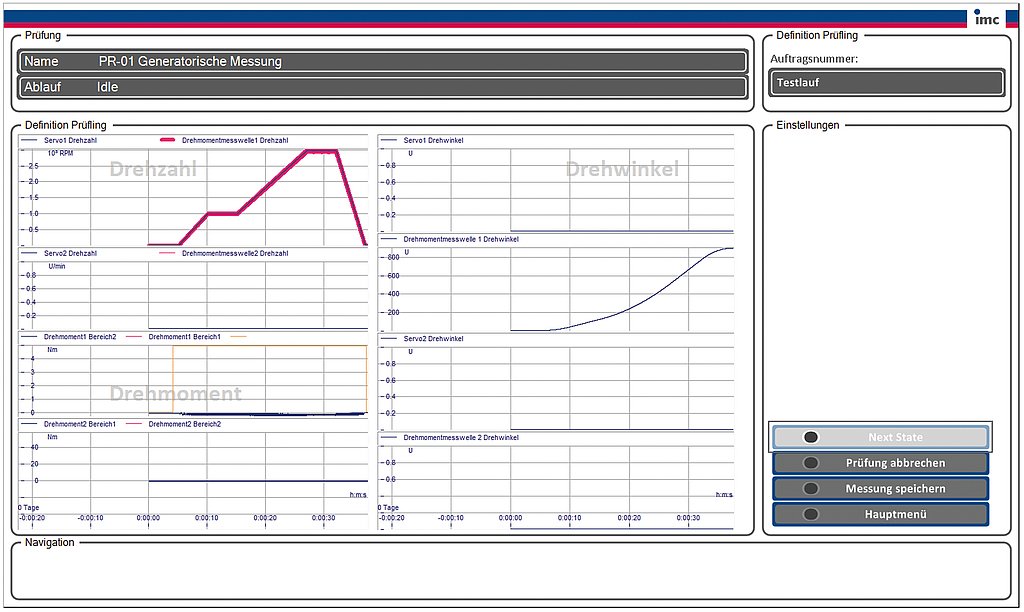
During characteristic curve testing, the test object is connected to the load machine via a coupling. As soon as the test starts, the load machine loads the test object for a predetermined time at a target speed. After the stabilization period is reached, the test object is switched on and a stationary torque is established on the shaft.
After a given time, the speed of the load machine is reduced from the stationary starting speed to a stopping speed. When the stopping speed is reached, the test object is switched off and the load machine reduces the speed to a standstill.
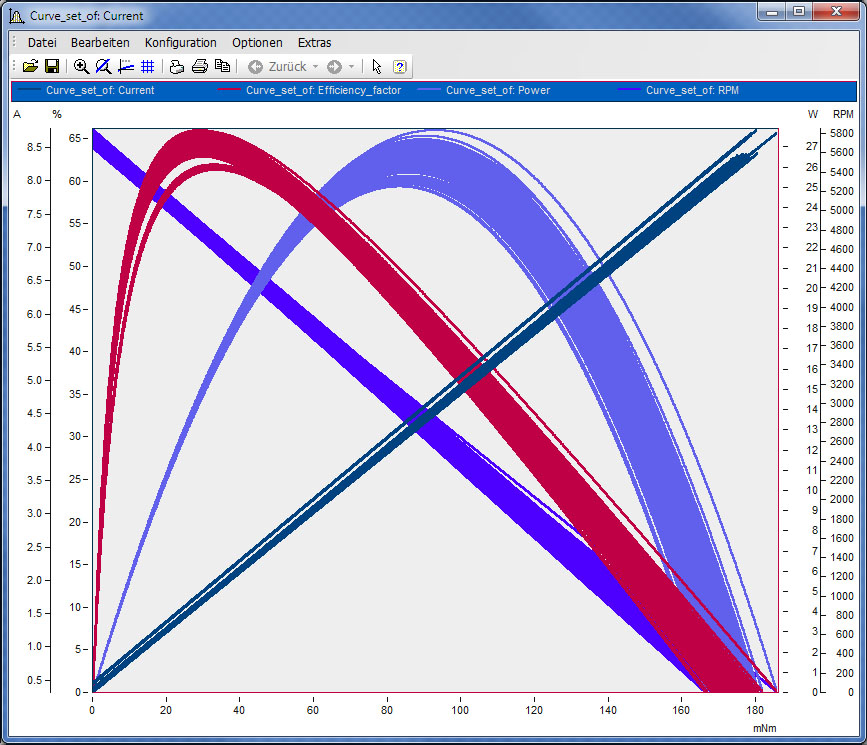
Results of speed-controlled characteristic curve testing
- Motor voltage time curve (with ECcompact per phase)
- Motor current time curve (with ECcompact per phase)
- Time curves for speed and torque
- Torque characteristic curve over rpm
- Current characteristic curve over rpm
- Characteristic curve of the electrical input power and the mechanical output power over rpm
- Characteristic curve of efficiency over rpm
Manual control test module
The manual control system allows manual monitoring of the test stand. The user can adjust the process variables of the test stand via input instruments on the software interface. However, no automated procedures are performed.
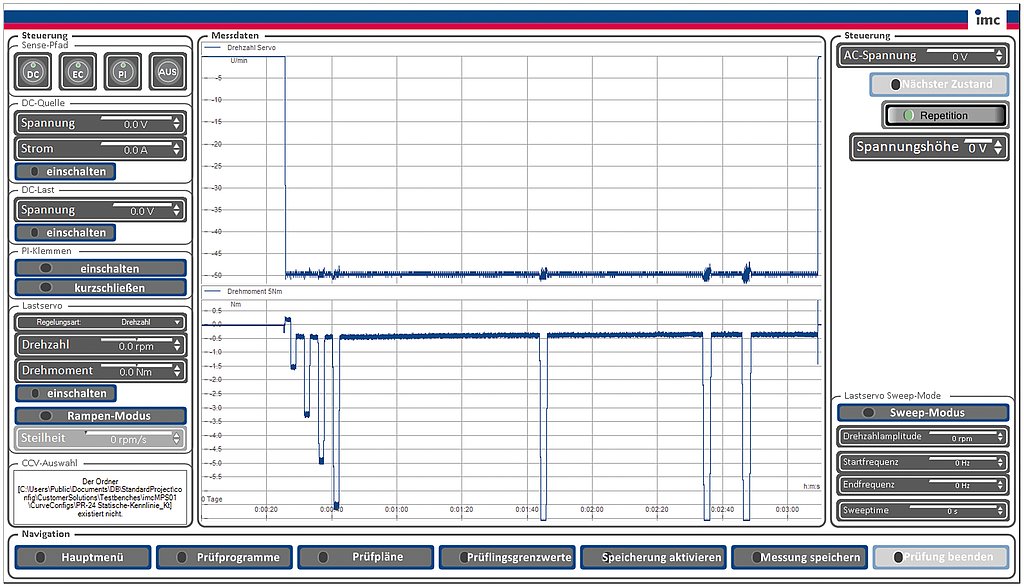
In manual control, the test stand is placed in a neutral state with measurement data recording. From this state, the user can control the test bench and carry out tests by individually connecting supply voltage, releasing the test object or load machine or setting the speed or maximum torque.
Results of manual control
- Voltage time curve (with ECcompact per phase)
- Current time curve (with ECcompact per phase)
- RPM time curve
- Torque time curve
Additional types of testing on request
Optionally, imc offers other types of testing, such as the parameter identification method, for example. These are not included in the price of the standard test stand.
Commissioning on site
After preliminary acceptance of the test stand by the customer, delivery to the installation site takes place. There, the test stand is positioned and the commissioning begins step by step after the connection of the supply lines. The functionalities defined in the project are verified once more. The test stand is then accepted.
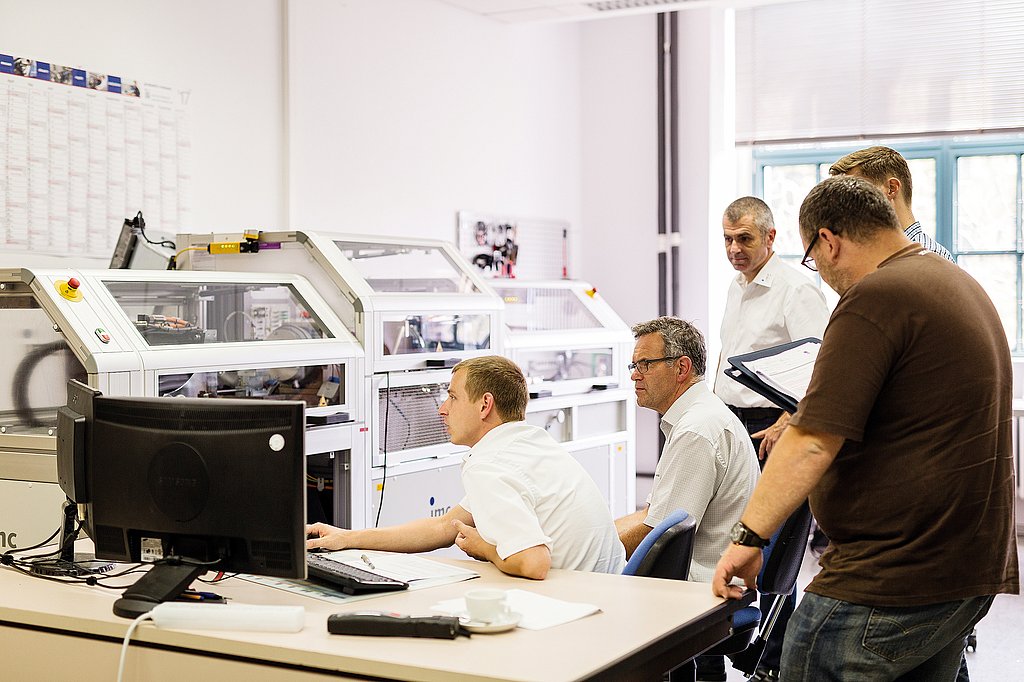

Test stand training
After commissioning, imc carries out customer training courses covering the following topics:
Test stand operation; mechanical components of the test stand; electrical components of the test stand, service and maintenance work.
Our experience for your success
Take advantage of our more than 25 years of experience in the design and construction of test stand solutions. Our standard test stands for electric motors are successfully used by many customers around the world. imc covers the entire spectrum of electrical motor testing from a single source: competent consulting, design and realization of test stands for special applications as well as development of test strategies and applications.
Application Examples